- OrcaWires
- Posts
- Crypto-themed restaurant stops accepting crypto 🍕
Crypto-themed restaurant stops accepting crypto 🍕
Crypto-themed restaurant stops accepting crypto 🍕

Today's market prices:

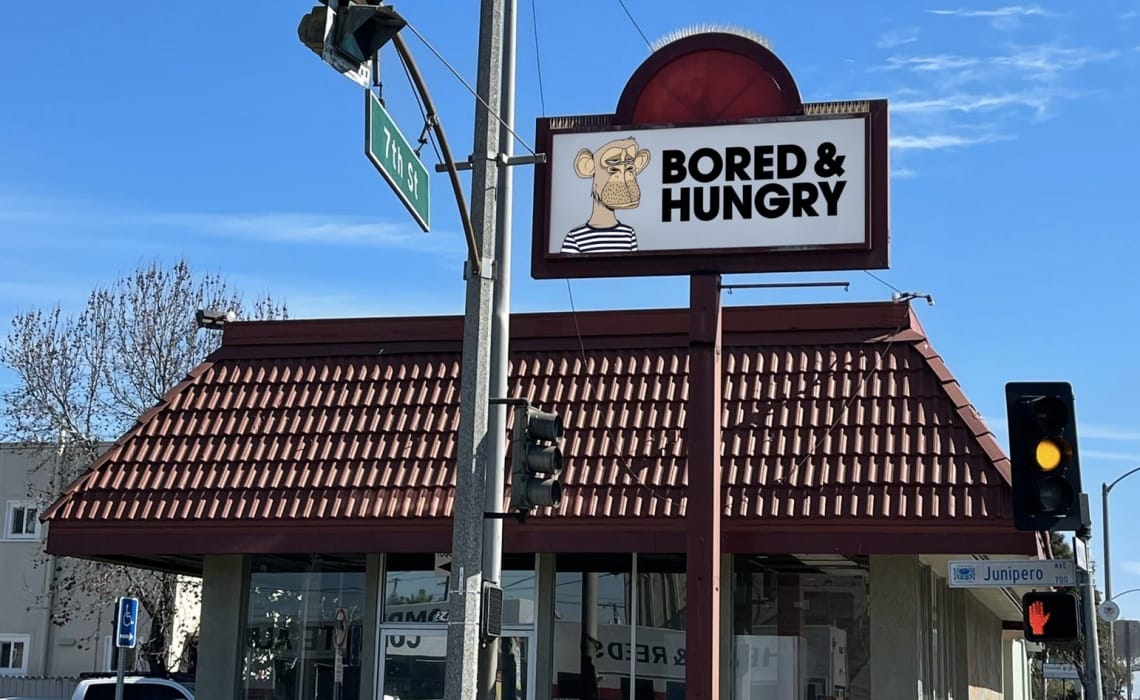
Bored & Hungry is a Long Beach fast-food spot that’s built a brand around crypto culture — even if customers can’t actually pay in crypto.
The Bored Ape-themed "Bored & Hungry" restaurant in Long Beach, California has stopped accepting crypto payments. Despite excitedly announcing the first-ever crypto purchase, made with Apecoin, when the restaurant opened in April, it seems crypto payments haven't been working out for them.
The LA Times reported that the restaurant had stopped accepting crypto at some point in the past and that an employee described the crypto payment option as both unwieldy and unpopular with customers.
For now, and indefinitely going forward, customers will have to pay for their $13 hamburgers with plain old fiat.
CBDCs, Not Crypto, Will Be Cornerstone of Future Monetary System, BIS Says
A 42-page chapter in the Bank for International Settlements’ annual economic report envisions a future where programmability and tokenization are built on top of central bank digital currencies.
“Our broad conclusion is captured in the motto, ‘Anything that crypto can do, CBDCs can do better,’” said Hyun Song Shin, an economic adviser and head of research at the BIS, during a press briefing on Monday.
“The second important finding is that crypto and stablecoins fail to achieve the full network effects that we normally expect of money,” Shin said.
Money, Shin said, is the perfect example of a virtuous circle of greater use and greater acceptance. Crypto’s decentralized nature, on the other hand, achieves exactly the opposite, namely fragmentation.
In the BIS blueprint for future monetary systems, CBDCs play the role of stable digital currencies used in settlements, transfers, and payments. But CBDC projects are still in the early stages in most major economies, with China ahead of the curve with its digital yuan.

“The Great Crash”?
Warren Buffet’s observation that “we only know who is bathing naked when the tide goes out” is a restatement of Galbraith’s argument that bad corporate and banking structures in 1929 only looked obvious with hindsight. This was demonstrated again in 2008. Today the banking system is far stronger, but stricter regulation has meant that risks have gravitated to non-banks.
The Shiller cyclically-adjusted Price/Earnings ratio for US stocks is currently twice its historical average and well above its peak before the 1929 crash. It is just short of the peak which foreshadowed the 1999 tech-wreck. Does history rhyme?
Quote of Wisdom:
"The key to investing is not assessing how much an industry is going to affect society, or how much it will grow, but rather determining the competitive advantage of any given company and, above all, the durability of that advantage."

DISCLAIMER: None of this is financial advice. This newsletter is strictly educational and is not investment advice or a solicitation to buy or sell any assets or to make any financial decisions. Please be careful and do your own research.